Signal Detection Pharmacovigilance Career: Step-by-Step Guide for Chemistry Graduates

Signal Detection Pharmacovigilance Career: A signal detection specialist reviews drug safety data to find new risks. They use statistical tools and medical knowledge to spot safety signals. Chemistry graduates can enter this field with training in pharmacovigilance and data analysis.
If you have a BSc or MSc in Chemistry and feel lost about your career, you are not alone. Many chemistry graduates don't know about the signal detection pharmacovigilance career. It's a high-demand job in drug safety. Colleges never teach you this. But you can learn it step by step.
You may feel low confidence in interviews because you lack industry skills. That's normal. But here's the good news: signal detection is a skill you can build with focused training. This guide shows you exactly how to start and crack interviews.
Build These Skills Now
Programs from ZANE ProEd Academy that directly address the skill gaps discussed above.
What is signal detection in pharmacovigilance?
Signal detection is the process of finding new safety information about a drug. When many patients report side effects, a signal may appear. A signal is a possible new risk. For example, a drug may cause a rare liver problem. Signal detection specialists look at large safety databases to find such patterns. They use statistics and medical knowledge. They work in pharmacovigilance, which is the science of monitoring drug safety.
Guidelines from ICH define signal detection standards. The WHO also plays a key role in global safety monitoring.
What is the salary of a Signal Detection Specialist in India?
Salary depends on experience and company. Freshers in India can earn ₹3.5 to ₹5 lakh per year. With 2-4 years of experience, salary rises to ₹6-10 lakh per year. Senior specialists earn ₹12-20 lakh per year or more. MNCs and CROs pay higher. Contract roles may pay hourly.
Factors that affect signal detection specialist salary include location, company size, and your knowledge of tools like Oracle Argus or AI platforms.
How to become a Signal Detection Specialist?
Follow these steps:
- Get a degree in pharmacy, chemistry, or life sciences.
- Learn pharmacovigilance basics.
- Get trained in signal detection tools.
- Build a portfolio with case studies.
- Apply for entry-level roles.
Chemistry graduates need extra training in drug safety concepts. Read this guide on signal detection careers for allied health graduates for more details.
What tools are used for signal detection?
Common tools include Oracle Argus, ArisGlobal, VigiBase, EudraVigilance, and statistical software like R or SAS. AI-based tools are now used. You don't need to know all. But hands-on practice with one or two tools helps you stand out.
The WHO maintains VigiBase, the global database of safety reports. The EMA uses EudraVigilance for Europe.
What qualifications are needed for signal detection roles?
A bachelor's degree in pharmacy, chemistry, or life sciences is the minimum. Many employers prefer a master's. But chemistry graduates can qualify with a pharmacovigilance certificate. Skills needed: attention to detail, data analysis, medical terminology, and communication. You also need to understand regulatory guidelines from FDA and CDSCO.
The signal detection job description often includes reviewing case reports, using safety databases, and writing signal detection reports. These skills are not taught in a typical BSc or MSc Chemistry program.
What colleges teach vs what employers expect
Colleges teach you organic chemistry, physical chemistry, and spectroscopy. But they don't teach you signal detection job description. Employers expect you to know how to assess case reports, how to use safety databases, and how to write signal detection reports. That's why many chemistry graduates feel unprepared. You must bridge this gap with practical training.
Your step-by-step roadmap to a signal detection pharmacovigilance career
- Learn pharmacovigilance fundamentals. Start with the basics of adverse events, ICSR case processing, and signal management.
- Understand signal detection methods. Study statistical algorithms like disproportionality analysis (PRR, ROR, etc.).
- Get hands-on with tools. Use free demos or simulation platforms to practice.
- Work on a mock project. Create a signal detection report for a sample drug using real-world data.
- Prepare for interviews. Practice answering scenario-based questions about safety signals.
- Apply for jobs. Target CROs, pharma companies, and regulatory agencies.
For more on case processing roles, read this guide.
How simulation-based learning bridges the gap
Simulation-based learning is the fastest way to gain practical skills. Instead of reading theory, you practice on real-life scenarios. ZANE ProEd uses a system that mimics actual signal detection workflows. You review case reports, run analysis, and write findings. This builds your confidence before interviews. No more guessing what employers want.
Build These Skills Now
Programs from ZANE ProEd Academy that directly address the skill gaps discussed above.
Courses that prepare you for real jobs
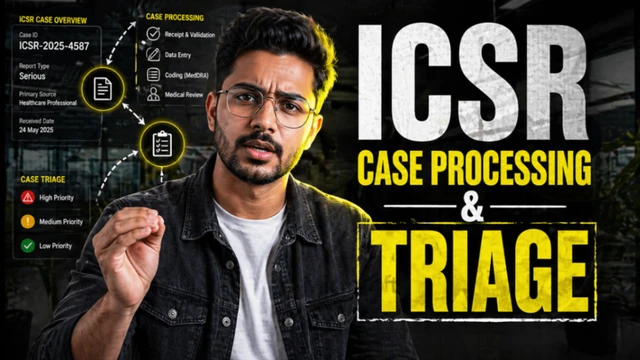
Two courses stand out for chemistry graduates: 'pharmacovigilance-signal-detection-with-ai' and 'icsr-case-processing-triage'. The first course teaches you signal detection using AI tools. You learn how to spot safety signals with modern software. The second course covers case processing and triage, which is the foundation of all pharmacovigilance work. Together, they give you a complete skill set. You don't just learn theory. You practice on simulated cases, just like a real job.
Check your job readiness
Go to ZANE ProEd and see how your skills compare to industry standards. Your chemistry degree is a strong base. Add the right training and you can walk into interviews with confidence.
Build These Skills Now
Programs from ZANE ProEd Academy that directly address the skill gaps discussed above.
Follow Zane ProEd on Google
Preferred SourceAdd our publication as a preferred source to get the latest clinical research guides, industry updates, and career intel directly in your Google Top Stories & AI Overviews.