Signal Detection Pharmacovigilance Career: Step-by-Step Guide for Chemistry Graduates

Signal Detection Pharmacovigilance Career: This career focuses on identifying new drug safety signals to protect patients. Even after a career gap, Chemistry graduates can enter by building skills in medical coding, case processing, and signal detection tools like Oracle Argus or ARISg.
Are you a BSc or MSc Chemistry graduate looking at a signal detection pharmacovigilance career after a career gap? You might feel like the industry has left you behind. But here’s the truth: your background in chemical sciences gives you a unique edge in understanding drug safety data. Companies now actively seek professionals who can bridge chemistry and data analysis.
Many non-medical graduates like you have successfully built careers in pharmacovigilance. The key is to learn the specific tools and workflows that employers expect. This guide will show you a clear step-by-step roadmap—no confusion, just real advice. For more inspiration, read about signal detection careers for non-medical backgrounds.
Build These Skills Now
Programs from ZANE ProEd Academy that directly address the skill gaps discussed above.
What is signal detection in pharmacovigilance?
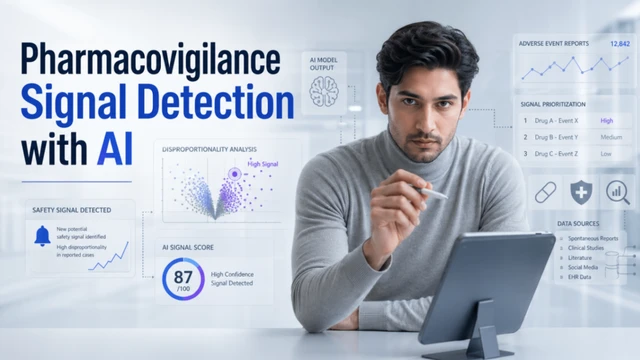
Signal detection is the process of finding new safety information from drug safety data. When a medicine is on the market, companies collect reports of side effects. Signal detection specialists analyze these reports using statistical methods to spot patterns. This is a critical part of pharmacovigilance signal management.
You don’t need a medical degree to understand this. With the right training, you can learn to use software that flags potential risks. This helps protect patients and keeps drugs safe.
What is the salary of a Signal Detection Specialist in India?
The signal detection specialist salary varies with experience and location. Here’s a typical range in India:
- Entry-level (0-2 years): ₹3.5 – 5 LPA
- Mid-level (3-5 years): ₹6 – 8 LPA
- Senior (5+ years): ₹10 – 15 LPA or more
Global companies and CROs often pay higher. With additional skills in AI-based signal detection, you can increase your earning potential. This is a career with real growth, even for those with a career gap.
How to become a Signal Detection Specialist?
Here’s a simple roadmap on how to become a signal detection specialist:
- Learn pharmacovigilance basics: Understand drug safety regulations from ICH and WHO.
- Study signal detection concepts: Know qualitative and quantitative methods.
- Hands-on tool training: Practice with tools like Oracle Argus, ARISg, or Empirica.
- Work on simulated cases: Build experience with real-world adverse event data.
- Get certified: A recognized certificate adds weight to your resume.
- Apply for jobs: Target entry-level roles like Drug Safety Associate or Jr. Signal Detection Specialist. Also explore opportunities listed in pharmacovigilance jobs for chemistry freshers.
Chemistry graduates have a strong foundation in analytical thinking—a key skill for this role.
What tools are used for signal detection?
The industry relies on several signal detection tools and methods. You’ll need to be familiar with:
- Oracle Argus Safety: Widely used for case processing and signal detection.
- ARISg (ArisGlobal): A cloud-based platform for safety and signal management.
- Empirica: Specializes in advanced signal analytics.
- VigiBase: WHO’s global database of adverse event reports.
These tools automate many tasks, but you still need human judgment to assess signals. Employers value candidates who can navigate these platforms confidently.
What qualifications are needed for signal detection roles?
You don’t need a medical degree. A BSc or MSc in Chemistry is a valid entry point. Here’s what else you need:
- Basic knowledge of pharmacology or toxicology (can be learned online).
- Certification in pharmacovigilance (e.g., from ZANE ProEd).
- Familiarity with regulatory guidelines (ICH, GVP).
- Strong analytical and communication skills.
Many employers provide on-the-job training, but certification gives you a head start, especially after a career gap.
The Hidden Gap: What Colleges Miss vs. What Industry Demands
Your chemistry degree taught you reaction mechanisms, but not drug safety databases. Here’s the reality check:
- Colleges teach: Theoretical organic chemistry, maybe some pharmacology.
- Employers expect: You to navigate an FDA adverse event reporting system, understand signal detection job description nuances, and query safety databases like on day one.
This gap is real, but it’s not your fault. The good news? It can be closed in weeks with focused, practical training.
Your 6-Step Roadmap to a Signal Detection Pharmacovigilance Career
- Build a Foundation: Start with free resources from CDSCO and EMA to understand global regulations. Read the basics of pharmacovigilance signal management.
- Master Medical Terminology: Learn terms like MedDRA coding. Even chemistry grads need this. It’s simpler than organic nomenclature!
- Get Hands-On with Tools: Use simulated environments to practice with Oracle Argus or ARISg. Many platforms offer trial access.
- Work on Realistic Projects: Dive into case processing and signal detection exercises. This builds a portfolio that speaks louder than a career gap.
- Earn a Certification: Complete a recognized program that includes AI-based signal detection. Look for one that offers job placement support.
- Launch Your Job Search: Tailor your resume with keywords like ‘signal detection’, ‘case processing’, ‘MedDRA coding’. Apply to CROs and pharma companies.
Simulation-Based Learning: The Fastest Way to Real Skills
Reading about signal detection isn’t enough. You need to do it. That’s where simulation-based learning changes the game. Imagine practicing on a replica of Oracle Argus with real adverse event cases. You learn the actual workflow—from logging a case to generating a signal report. This hands-on experience makes you job-ready, even with a career gap.
Build These Skills Now
Programs from ZANE ProEd Academy that directly address the skill gaps discussed above.
How ZANE ProEd Bridges the Gap for Chemistry Graduates
ZANE ProEd offers a specialized program designed for non-medical graduates like you. The pharmacovigilance-signal-detection-with-ai pathway covers everything from case processing to advanced signal detection using AI. No prior medical knowledge needed. You’ll work on simulated industry cases, learning tools that top employers use. The focus is on building real skills, not just theory. Graduates have successfully restarted their careers after gaps of 2–5 years.
Ready to see if your skills match industry expectations? Check your job readiness with a quick self-assessment. Compare your current knowledge to what signal detection roles actually require. It’s the first step to closing the gap.
Build These Skills Now
Programs from ZANE ProEd Academy that directly address the skill gaps discussed above.
Follow Zane ProEd on Google
Preferred SourceAdd our publication as a preferred source to get the latest clinical research guides, industry updates, and career intel directly in your Google Top Stories & AI Overviews.