Signal Detection Pharmacovigilance Career: Complete Guide for Pharmacy Graduates

Signal Detection Specialist A signal detection pharmacovigilance career involves analyzing drug safety data to find new risks. Pharmacy graduates in India can enter this field with the right skills. It offers strong pay and growth. You need to learn data analysis, medical coding, and global safety regulations.
90% of pharmacy graduates fail to build a signal detection pharmacovigilance career because they lack practical skills. If you have failed campus placements multiple times, you are not alone. The problem is not your BPharm or MPharm degree. The problem is that colleges teach theory, but employers demand hands-on experience.
This blog is a mistake audit. We will show you exactly where you go wrong and how to fix it. You will learn what signal detection is, the salary, the tools, and the step-by-step path to become job-ready. No fancy jargon. Just honest advice from someone who has seen hundreds of resumes.
Build These Skills Now
Programs from ZANE ProEd Academy that directly address the skill gaps discussed above.
What is a signal detection pharmacovigilance career?
A signal detection pharmacovigilance career focuses on finding safety signals from drug data. A signal is a new or changing risk that may affect patient safety. You analyze reports from clinical trials, spontaneous adverse events, and medical literature. You then flag these signals for further review. This role is critical in every pharma company and CRO.
According to ICH guidelines, signal detection is a core part of pharmacovigilance. The WHO also runs a global database called VigiBase for signal detection. In India, regulators like CDSCO require companies to track signals. This creates a constant demand for skilled specialists.
Your daily work includes reviewing case reports, running statistical algorithms, and writing safety assessments. You work with databases and coding systems like MedDRA. The career path is clear: entry-level analyst to senior scientist to team lead. The key is to get the right training and practice.
What is the salary of a Signal Detection Specialist in India?
The signal detection specialist salary in India depends on experience, location, and company. Here is a practical breakdown:
- Entry level (0–2 years): ₹3–5 lakh per annum. You start as a drug safety associate or junior signal analyst.
- Mid-level (3–6 years): ₹6–10 lakh per annum. You handle independent signal assessments and lead small projects.
- Senior level (7+ years): ₹12–20 lakh per annum. You manage global signal detection teams and regulatory strategy.
Top pharma companies and global CROs pay higher than small Indian firms. Bangalore, Hyderabad, and Pune offer the best packages. The salary is good, but only for those who can do the work. Without practical skills, you stay at the bottom or stay unemployed.
How to become a Signal Detection Specialist?
To build a career in signal detection, follow these steps. Do not skip the practice part. Theory alone will not get you hired.
- Get your degree: A BPharm or MPharm is the minimum. Life science graduates can also enter with extra training.
- Learn pharmacovigilance basics: Study ICH E2E guidelines and GVP modules. Know how adverse events are collected and reported.
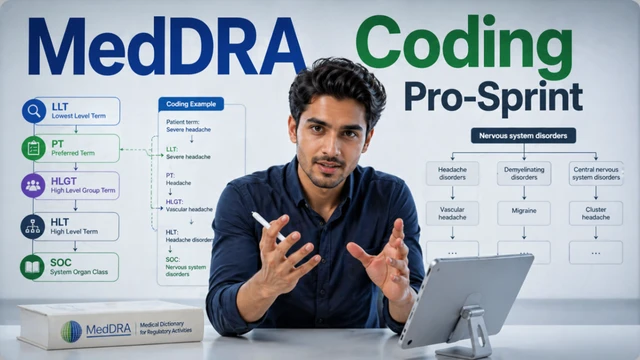
- Master MedDRA coding: MedDRA is the medical dictionary used for coding. You must be able to code terms accurately.
- Get hands-on with signal detection tools: Practice on databases like Oracle Argus or VigiLyze. You cannot learn tools by reading slides.
- Work on real datasets and case studies: Simulate signal detection scenarios. Analyze fake but realistic safety data and write reports.
- Get a certification: A recognized certification adds credibility. But choose one that includes practical simulations, not just theory.
- Apply to entry-level roles: Target job titles like Drug Safety Associate, Pharmacovigilance Analyst, or Junior Signal Detection Specialist.
Internal link: See our detailed guide on signal detection career paths for more insights.
What tools are used for signal detection?
Companies use specific software for signal detection tools and methods. You need to know at least one of these before applying. Here are the most common ones:
- Oracle Argus Safety: The most widely used pharmacovigilance database in India. Stores adverse event reports and generates signals.
- ArisGlobal LifeSphere: A cloud-based safety platform used by many global CROs.
- Empirica Signal: A specialized signal detection tool for statistical analysis.
- VigiLyze: WHO's global signal detection tool. Free to access with training.
- R and Python: Programming languages used for custom data analysis and automation.
- SQL: For querying safety databases and extracting data.
Employers expect you to have working knowledge of at least one database and one analysis method. If your resume says "familiar with Argus" but you have never entered a single case, interviewers will find out in minutes.
See also: Pharmacovigilance jobs for BPharm freshers to understand entry-level expectations.
What qualifications are needed for signal detection roles?
The signal detection job description usually lists these requirements. You must meet most of them to get shortlisted.
- Education: BPharm, MPharm, PharmD, or BSc/MSc in life sciences.
- Knowledge: ICH guidelines, GVP modules, and Indian pharmacovigilance regulations.
- Skill: MedDRA coding, case processing, and signal assessment.
- Experience: 0–2 years for entry-level. Internships or projects count if they are practical.
- Tool proficiency: At least one safety database and one statistical method.
- Soft skills: Attention to detail, written communication, and ability to work in a team.
Many candidates have the degree and even a certificate, but they fail because they have never done real signal detection work. That is why EMA and FDA emphasize continuous practical training.
The Skill Gap: What Colleges Teach vs What Employers Expect
Colleges teach you pharmacology, clinical pharmacy, and drug regulation. But employers expect you to know how to use a safety database, code a case with MedDRA, and run a signal detection algorithm. This gap is why most BPharm and MPharm graduates struggle in interviews.
You might have a certificate that says you learned pharmacovigilance. But if you never touched a tool or analyzed a real dataset, you are not job-ready. Companies do not have time to train you from zero. They want you to produce results from day one.
A Step-by-Step Pathway to a Signal Detection Career
Here is a practical roadmap to fill the gap and land a job.
- Foundation (Week 1–2): Study ICH E2E and GVP Module IX. Understand signal detection concepts: disproportionality analysis, Bayesian methods, and data mining.
- MedDRA Mastery (Week 3–4): Take a structured MedDRA course. Practice coding terms from real adverse event reports. Learn how to select the correct lowest level term.
- Tool Simulation (Week 5–8): Get access to a simulated safety database. Enter cases, run queries, and generate signal reports. Do at least 10 practice cases.
- Case Studies (Week 9–10): Work on 2–3 end-to-end signal detection projects. Analyze a dataset, identify potential signals, and write a safety assessment report.
- Interview Prep (Week 11–12): Build a portfolio of your practice work. Prepare answers for common questions on signal detection methods and tools. Apply to 20+ entry-level roles.
Why Simulation-Based Learning is the Missing Piece
Reading about signal detection is not enough. You must practice on real tools and real data. Simulation-based learning gives you a safe environment to make mistakes and learn. You do not need to wait for a job to get hands-on experience.
ZANE ProEd offers a system where you practice signal detection exactly like you would in a company. You learn by doing, not by watching videos. This is the difference between having a certificate and being job-ready.
Build These Skills Now
Programs from ZANE ProEd Academy that directly address the skill gaps discussed above.
How ZANE ProEd Builds Your Job-Ready Skills
The pharmacovigilance-signal-detection-with-ai course gives you practice with AI-based signal detection tools. You work on real datasets and learn to spot safety signals faster. The meddra-medical-coding-certification course ensures you can code medical terms accurately. Together, they form a system that fills your skill gap completely.
This is not about buying a course. It is about building a career. You can check our approach to see why we focus on simulations and real-world practice.
Ready to see where you stand? Check your job readiness with a quick self-assessment. Compare your current skills to what employers expect. If you are not ready, the system will show you how to get there.
Build These Skills Now
Programs from ZANE ProEd Academy that directly address the skill gaps discussed above.
Follow Zane ProEd on Google
Preferred SourceAdd our publication as a preferred source to get the latest clinical research guides, industry updates, and career intel directly in your Google Top Stories & AI Overviews.