Signal Detection Pharmacovigilance Career: Step-by-Step Guide for Life Science Graduates
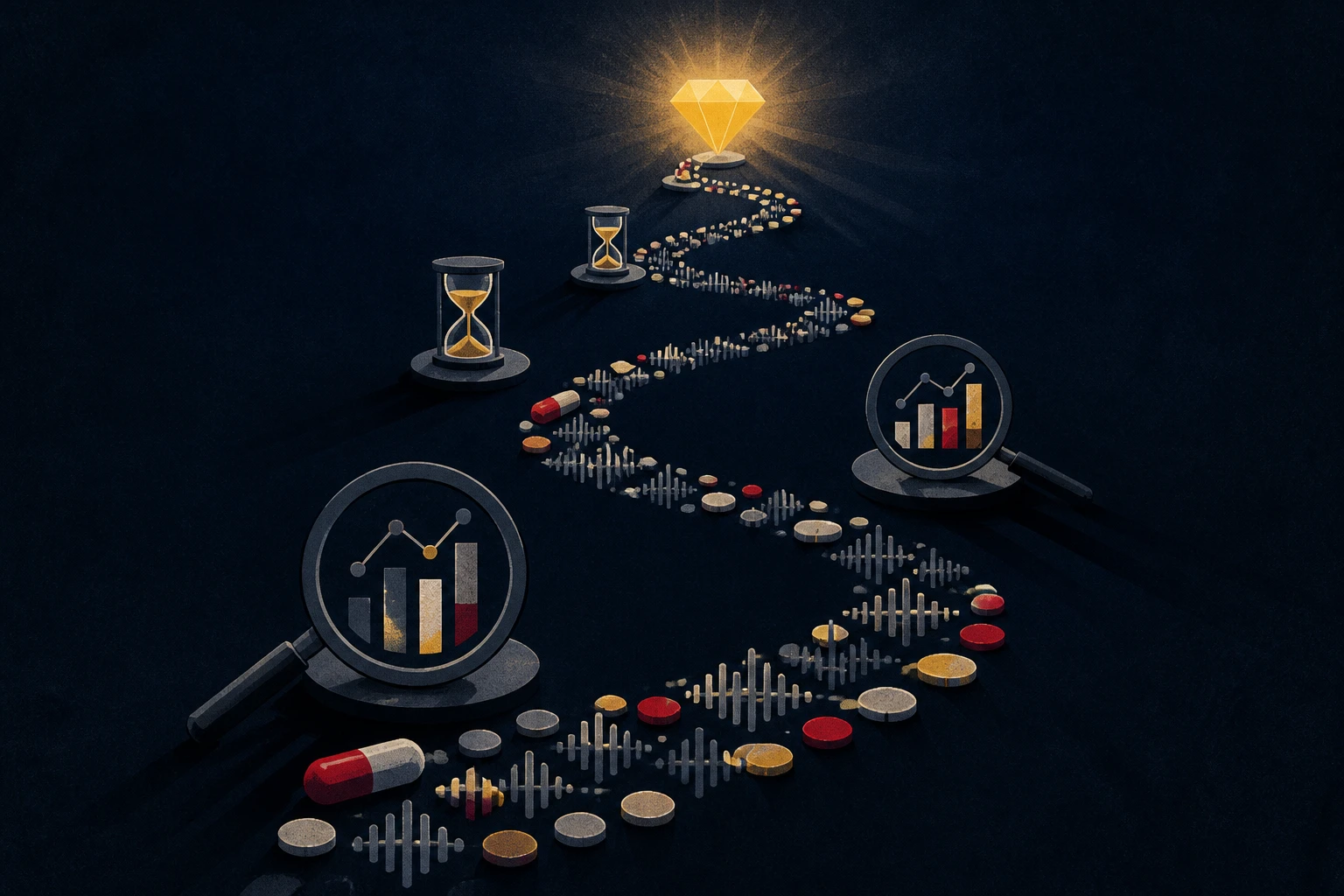
Signal Detection Specialist A signal detection pharmacovigilance career means you find safety signals in drug data. You review reports, use tools like signal detection software, and decide if a drug has a new risk. This job pays well and is in high demand in India. You need life science knowledge, data skills, and PV training.
If you are a BSc or MSc Biotechnology, Microbiology, or Biochemistry graduate and you did internships but still no job, listen carefully. The pharma industry does not want another intern who just files papers. They want someone who can actually find safety problems in drug data. A signal detection pharmacovigilance career could be your break. This is not a job for coding geniuses. It is for people like you who understand biology and can learn a simple system.
Right now, AI is changing drug safety. Companies need people who can work with FDA and EMA rules, use signal tools, and make decisions fast. Your degree gives you the base. You just need the right bridge to the job.
Build These Skills Now
Programs from ZANE ProEd Academy that directly address the skill gaps discussed above.
What is signal detection in pharmacovigilance?
Signal detection is the process of finding new or changing safety issues from a drug after it goes to market. In pharmacovigilance signal management, you collect adverse event reports, look for patterns, and decide if a signal is real. A signal could mean a drug causes a side effect that was not known before.
Your daily work as a Signal Detection Specialist includes:
- Reviewing individual case safety reports (ICSRs) from doctors, patients, and clinical trials.
- Using statistical tools to see if a side effect appears more often than expected.
- Writing safety reports for regulators like ICH and CDSCO.
- Tracking signals over time and deciding if action is needed, like a label change.
This job is not boring. You are the person who catches problems before they hurt patients. It is a high-responsibility role that pays for that responsibility.
What is the salary of a Signal Detection Specialist in India?
The signal detection specialist salary in India depends on experience and company, but here is a realistic range for freshers and early career:
- Fresher (0–1 year): ₹3.5 – ₹5.5 lakh per year
- Mid-level (2–5 years): ₹6 – ₹12 lakh per year
- Senior specialist or lead (5+ years): ₹15 – ₹25 lakh per year
Pharma companies, CROs like IQVIA and Parexel, and IT vendors pay the most. A fresher with real signal detection training can start at the higher end. Your internships may not have paid, but this job will.
How to become a Signal Detection Specialist?
You do not need a PhD. You need a clear roadmap. Here is the simplest path for how to become a signal detection specialist in India:
- Get a degree in life science (BSc or MSc Biotechnology, Microbiology, Biochemistry, or BPharm). You already have this.
- Learn the basics of pharmacovigilance. Start with case processing to understand how reports flow. Read our guide on pharmacovigilance case processing jobs for freshers.
- Learn signal detection methods and tools. Focus on quantitative signal detection, like disproportionality analysis.
- Practice with real-world data or simulations. Employers do not want theory. They want you to use tools like Oracle Argus or VigiBase.
- Build a small portfolio of signal reports you created during training. Show it in interviews.
- Apply to entry-level roles like Drug Safety Associate or Junior Signal Detection Analyst, then move up.
Do not wait for another internship. Many freshers get stuck because they only know theory. Break the cycle with practical skill building. Check our full breakdown of pharmacovigilance jobs for freshers in India.
What tools are used for signal detection?
Employers expect you to know at least one signal detection tools and methods platform. The most common tools are:
- Oracle Argus – the industry standard for case processing and signal detection.
- ArisG – used by many CROs for safety database management.
- VigiBase – the WHO global database of adverse events. You can access limited data through WHO.
- FAERS – FDA’s adverse event reporting system. You can query it for practice on the FDA website.
- Empirica Signal – a specialised tool for quantitative signal detection used by big pharma.
You do not need to master all of them. Start with Oracle Argus and FAERS. Learn how to run a simple disproportionality report. That is enough to show you are job-ready.
What qualifications are needed for signal detection roles?
The signal detection job description typically asks for:
- BSc or MSc in life sciences (Biotech, Microbiology, Biochemistry), BPharm, PharmD, or MD.
- Knowledge of pharmacovigilance regulations and ICH guidelines.
- Ability to use safety databases and Excel for data review.
- Strong attention to detail and basic statistical thinking.
- Good written English for safety reports.
Here is the problem: your college taught you cell biology, but not signal detection. Your internships taught you how to file papers, not how to identify a safety signal. That is the gap. Employers want you to hit the ground running from day one.
Why Internships Don't Prepare You for Signal Detection Jobs
The bitter truth is that most life science internships in India are admin-heavy. You might sort documents, enter data, or shadow someone. You rarely touch a signal detection tool. You never write a real safety signal report. So when you interview, you cannot answer practical questions.
Employers expect you to know:
- What is a case narrative?
- How to calculate a proportional reporting ratio (PRR).
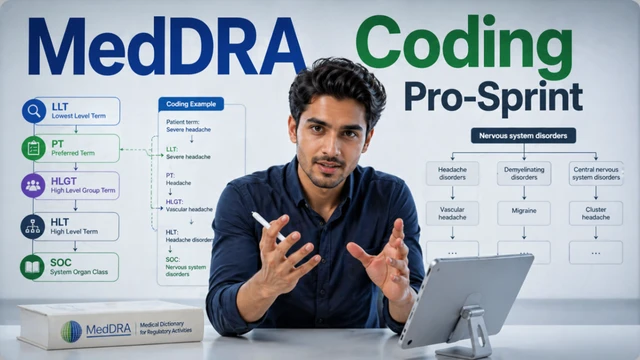
- How to use MedDRA coding for adverse events.
- What is a signal of disproportionate reporting (SDR)?
Colleges skip these. Internships skip these. That is why you are stuck. You need a system that simulates the actual job before you apply.
Your 6-Month Roadmap to a Signal Detection Specialist Job
Follow this step-by-step plan and you can walk into interviews with confidence.
- Month 1: Learn PV basics. Complete a short pharmacovigilance foundations module. Understand ICSRs, case processing, and regulatory timelines.
- Month 2: Master medical coding. Learn MedDRA coding and standardised MedDRA queries (SMQs). This is the language of signal detection.
- Month 3: Get hands-on with signal tools. Practice on FAERS or a free signal detection simulator. Run basic disproportionality analyses.
- Month 4: Build a mini portfolio. Create three sample signal detection reports based on real public data. Show the tool, the data, and your conclusion.
- Month 5: Prepare for interviews. Revise common questions: “How do you confirm a signal?” “What is the difference between a signal and a risk?”
- Month 6: Apply smart. Target CROs and mid-size pharma in Hyderabad, Bangalore, Pune, and Mumbai. Use your portfolio as proof.
This plan works because it closes the skills gap. No more waiting for someone to train you on the job.
The Simulation Bridge: Learn Signal Detection by Doing It
You cannot learn signal detection from a textbook. You need a safe environment to make mistakes and see real outputs. That is why simulation-based learning is the fastest bridge from degree to job. You work on a simulated safety database, create signals, and write reports exactly like you would in a company.
This is not another course where you watch videos and take a quiz. It is a practice lab. After completing a simulation, you can say in an interview: “I have run a disproportionality analysis on a dataset of 10,000 ICSRs and identified two validated signals.” That sentence gets you hired.
Build These Skills Now
Programs from ZANE ProEd Academy that directly address the skill gaps discussed above.
How ZANE ProEd Fits Into Your Signal Detection Career Plan
ZANE ProEd is not a course provider. It is a career system built for life science freshers. The pharmacovigilance-signal-detection-with-ai program puts you inside a synthetic PV environment. You work on real-world-like cases, use signal detection tools, and get feedback from industry experts. You also learn how AI is changing signal detection, so you stay ahead.
Pair that with the meddra-medical-coding-certification to master the coding backbone of PV. These two together give you the exact skill set that employers list in job descriptions. You finish with a portfolio, not just a certificate.
If you are serious about a signal detection pharmacovigilance career, stop applying with no proof. Start building proof.
Ready to Check Your Job Readiness?
Take the next small step. See how your current skills compare to what employers want. Check your job readiness for signal detection roles. Compare your knowledge of MedDRA, FAERS, and signal methods against a real job description. Then decide what to fix first. Your degree is enough. You just need the bridge.
Build These Skills Now
Programs from ZANE ProEd Academy that directly address the skill gaps discussed above.
Follow Zane ProEd on Google
Preferred SourceAdd our publication as a preferred source to get the latest clinical research guides, industry updates, and career intel directly in your Google Top Stories & AI Overviews.