Signal Detection Pharmacovigilance Career: A Complete Guide for Freshers

Signal Detection Specialist A signal detection pharmacovigilance career is about finding safety risks in drugs after they reach the market. You analyze data from reports, studies, and databases to spot patterns that could indicate side effects. This role is critical for patient safety and is growing in India's pharma and IT sectors.
Are you a BSc, BCA, or BTech graduate feeling stuck in low-paying IT/BPO jobs? You hear about pharmacovigilance but feel underqualified because you're not from a medical background. Here's the truth: a signal detection pharmacovigilance career is open to you, even without a healthcare degree. Recruiters are looking for smart graduates who can learn tools and processes quickly—and in the next hiring cycle, you could be the one they call.
Many freshers lack confidence because they think only pharmacy or life science graduates can enter this field. But companies now value analytical skills and tool proficiency over degree labels. The key is closing the skill gap fast and showing interviewers you're ready from day one.
Build These Skills Now
Programs from ZANE ProEd Academy that directly address the skill gaps discussed above.
What is signal detection in pharmacovigilance?
Signal detection is the process of identifying new, previously unknown adverse effects of medicines. When a drug is on the market, millions use it. Sometimes rare side effects appear only after large-scale use. Your job as a Signal Detection Specialist is to monitor this data and find safety signals.
You'll work with large databases of Individual Case Safety Reports (ICSRs), scientific literature, and real-world data. Using statistical methods like disproportionality analysis, you spot patterns. For example, if a particular side effect appears more often with a drug than expected, it triggers a signal. Then you help with pharmacovigilance signal management—validating, prioritizing, and escalating risks to regulators like the FDA or CDSCO.
In daily work, the signal detection job description includes: reviewing case narratives, using algorithms, preparing signal detection reports, and collaborating with medical reviewers. It's a mix of data, science, and regulation. For a detailed career guide, check out our Signal Detection Career Guide.
What is the salary of a Signal Detection Specialist in India?
The signal detection specialist salary in India varies by experience and company. For entry-level roles, you can expect:
- Freshers: ₹3.5 Lakhs to ₹5 Lakhs per annum
- 2-4 years experience: ₹6 Lakhs to ₹9 Lakhs
- Senior specialists or leads: ₹12 Lakhs to ₹18 Lakhs
Top employers include global pharmacovigilance service providers (like Accenture, Cognizant, IQVIA) and pharma companies (like Novartis, Pfizer). Salaries in metro cities are higher, and with AI/automation skills, you can command a premium. See our Pharmacovigilance Jobs for Freshers Guide for more on breaking in.
How to become a Signal Detection Specialist?
If you're wondering how to become a signal detection specialist, here's a simple roadmap:
- Learn the basics of pharmacovigilance: Understand the drug lifecycle, safety reporting, and regulatory guidelines (ICH E2E, E2C). Free resources from ICH and FDA are great starters.
- Master signal detection methods: Study statistical techniques like disproportionality analysis, Bayesian methods, and trend analysis. Tools like Oracle Argus Safety, ArisGlobal LifeSphere, and custom databases are common.
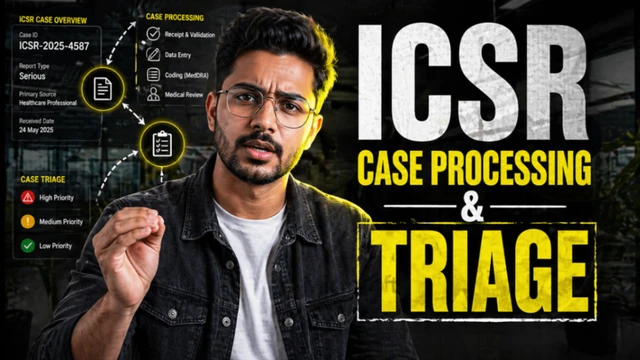
- Get hands-on with case processing: Signal detection relies on good quality ICSR data. Learn how to intake, triage, and code cases using MedDRA terminology. Our course on ICSR Case Processing and Triage gives you exactly that.
- Practice with real-world scenarios: Simulation-based platforms let you work on mock safety databases, detect signals, and write reports—the same tasks you'll do on the job. This bridges the confidence gap.
- Apply strategically: Target entry-level roles like Drug Safety Associate with a focus on signal management, or specifically Signal Detection Analyst positions. Prepare for interviews by knowing common questions and tools.
What tools are used for signal detection?
Knowing the right signal detection tools and methods is critical. Recruiters look for familiarity with:
- Safety databases: Oracle Argus, ArisGlobal LifeSphere, AWS (ArisGlobal Workflow System), or custom in-house solutions.
- Statistical analysis: SAS, R, or Python for data mining. Many companies now use AI/ML algorithms for automated signal detection.
- Signal management platforms: Tools like Traceability, SCEPTRE, or VigiBase (WHO's global database) are industry standards.
- Data visualization: Tableau or Power BI to present trends and signals.
In our course Pharmacovigilance Signal Detection with AI, you'll gain hands-on experience with these tools in simulated environments, making you interview-ready.
What qualifications are needed for signal detection roles?
Good news: you don't need a medical degree. Companies hire graduates from BSc, BCA, BTech, and even non-healthcare IT/BPO backgrounds. The key qualifications and skills are:
- Education: Bachelor's in any life science, pharmacy, nursing, or computer science is acceptable. Some prefer a Master's in public health or regulatory affairs, but it's not mandatory.
- Core skills: Strong analytical and problem-solving abilities. Attention to detail is a must.
- Technical skills: Basic SQL, data analysis, and familiarity with safety databases. Knowledge of MedDRA and regulatory guidelines is a big plus.
- Soft skills: Communication to explain signals to non-technical teams and write clear reports.
Employers often value certifications or practical training over degrees. If you have a portfolio of simulated signal detection projects, it speaks louder than a CV.
The real skill gap: what colleges don't teach
Here's why many freshers get rejected: they know theory but can't perform real tasks. A BSc life science program might cover pharmacology, but it rarely includes actual signal detection workflows. An IT graduate may know programming, but not how to apply it to drug safety data.
The recruiter reality is harsh: they need someone who can log into a safety database, run a disproportionality analysis, and draft a signal validation report within the first week. If your education didn't provide that, you're seen as a risky hire. This is especially true for non-medical switchers from IT/BPO—you need to prove you can handle the domain-specific tools and regulations.
A clear pathway to become a Signal Detection Specialist
Follow these steps to bridge the gap quickly:
- Understand the ecosystem. Spend 2 weeks reading ICH E2E guidelines and scanning case study examples from WHO's VigiBase.
- Learn case processing fundamentals. Even if your target is signal detection, you must know how cases are created and coded. Take an online simulation for hands-on practice.
- Master signal detection techniques. Dive into statistical methods and tool simulations. Our Signal Detection with AI course covers both traditional and modern AI approaches.
- Build a project portfolio. Complete at least 3 mock signal detection projects: run queries, generate reports, and present findings.
- Optimize your CV and LinkedIn. Highlight tools, projects, and simulation hours. Use keywords like "pharmacovigilance signal management", "disproportionality analysis", and "MedDRA coding".
- Apply to entry roles and ace the interview with confidence because you've already done the job in simulations.
Simulation: the missing bridge
Textbooks and video lectures won't make you confident. You need to "do the job" before you get the job. That's where simulation-based learning comes in. Imagine a virtual pharmacovigilance department where you process ICSRs, run signal detection algorithms on a realistic database, and respond to urgent safety queries. This hands-on practice builds the muscle memory and decision-making skills that recruiters look for.
ZANE ProEd's system provides exactly this. You don't just learn; you perform. You'll make mistakes in a safe environment, get feedback, and improve—so on your first day at work, you're not fumbling.
\nBuild These Skills Now
Programs from ZANE ProEd Academy that directly address the skill gaps discussed above.
Once you've experienced simulation, you'll understand why it's a game-changer. The Pharmacovigilance Signal Detection with AI course lets you explore advanced detection algorithms and real-world datasets. Meanwhile, ICSR Case Processing and Triage grounds you in the data foundation. Both are designed to simulate the exact tasks you'll face in the industry, erasing the fear of the unknown.
Don't wait for the next rejection. Check your job readiness today. See how your skills compare against what top employers demand. With the right system, a signal detection pharmacovigilance career is not just a possibility—it's your next move.
Build These Skills Now
Programs from ZANE ProEd Academy that directly address the skill gaps discussed above.
Follow Zane ProEd on Google
Preferred SourceAdd our publication as a preferred source to get the latest clinical research guides, industry updates, and career intel directly in your Google Top Stories & AI Overviews.