Signal Detection Pharmacovigilance Career: How to Start with No Experience

Signal Detection Pharmacovigilance Career is a specialized role where you analyze drug safety data to identify new risks. With AI tools, freshers from BDS, BHMS, BAMS, and Nursing can enter this field. Starting salaries range from ₹3.5–6 LPA in India.
Recruiters reveal that degrees alone are no longer enough in today's AI-driven healthcare industry. If you are a BDS, BHMS, BAMS, or Nursing graduate with no experience, you might think a signal detection pharmacovigilance career is out of reach. But the truth is, companies are actively hiring freshers who show the right skills.
Signal detection is where technology meets patient safety. Real-world data from patients, hospitals, and clinical trials flows in every day. Your job? Spot hidden patterns that could indicate a drug's unknown side effect. It's high-impact work, and the demand for skilled specialists is growing fast.
Build These Skills Now
Programs from ZANE ProEd Academy that directly address the skill gaps discussed above.
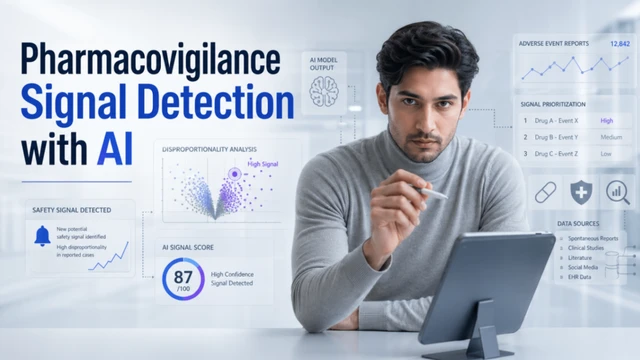
This guide answers every question you have about breaking into this field—without any prior experience. From salaries to tools to a step-by-step roadmap, we'll cover it all, straight from a recruiter's desk.
What is signal detection in pharmacovigilance?
Signal detection is the process of finding new or changing safety information about a drug from data. In pharmacovigilance, a 'signal' is information that suggests a possible new risk linked to a medicine. For example, if many patients report a rare liver issue after taking Drug X, that's a potential signal. Specialists use statistical methods and tools to analyze adverse event reports from databases like WHO's VigiBase.
Pharmacovigilance signal management includes detecting, validating, confirming, and communicating these signals. It's a core part of keeping medicines safe after they reach the market. Regulatory bodies like FDA and EMA require companies to have strong signal detection systems.
As a Signal Detection Specialist, you'll work with global safety databases, medical coding (MedDRA), and advanced analytics. You don't need to be a data scientist, but you must understand how to interpret the data. This is where your clinical background gives you an edge.
What is the salary of a Signal Detection Specialist in India?
Let's talk numbers. The signal detection specialist salary in India varies by experience and skill set. Here's a realistic breakdown for 2025:
- Freshers (0–1 year): ₹3.5 LPA to ₹6 LPA, depending on the company (MNCs pay higher).
- Mid-level (2–5 years): ₹6 LPA to ₹10 LPA.
- Senior (5+ years): ₹12 LPA+ and can go up to ₹18 LPA in niche roles.
Salaries are higher if you bring AI or automation skills. Companies like Accenture, IQVIA, and Parexel often hire for these roles. Even smaller CROs now invest in signal detection teams. Remember, the signal detection job description typically includes data mining, case analysis, and report writing—skills that you can learn quickly.
How to become a Signal Detection Specialist?
If you're starting with zero experience, follow this roadmap. It's designed specifically for allied health graduates and can take 3–6 months.
- Build a foundation in pharmacovigilance. Understand the lifecycle of a drug, adverse event reporting, and ICH guidelines (E2E, E2C). Free resources are available on ICH and CDSCO sites.
- Master signal detection tools and methods. Learn to use Oracle Argus, ArisGlobal LifeSphere, or similar safety databases. Practice statistical methods like Proportional Reporting Ratio (PRR) and Bayesian Confidence Propagation Neural Network (BCPNN).
- Gain hands-on simulation experience. Most employers want practical exposure. Platforms that simulate real-world case processing and signal detection workflows give you a massive advantage.
- Earn a niche certification. A dedicated program in AI-driven signal detection makes your CV stand out. It proves you can handle modern tools.
- Apply strategically. Target entry-level roles like Drug Safety Associate, Pharmacovigilance Scientist, or Junior Signal Detection Specialist. Customize your resume to highlight tool proficiency and project work.
For a detailed career roadmap, read our in-depth signal detection pharmacovigilance career guide.
What tools are used for signal detection?
Modern signal detection tools and methods combine traditional databases with AI. Here's what you'll encounter daily:
- Safety Databases: Oracle Argus, ArisGlobal LifeSphere, and VigiBase (WHO).
- Analytics Software: SAS, R, Python (for data mining) or built-in modules in safety systems.
- Statistical Methods: Disproportionality analysis using PRR, Reporting Odds Ratio (ROR), and Bayesian methods.
- AI/ML Platforms: Automated signal detection algorithms that scan millions of records to flag potential risks.
Your job isn't just running reports; it's about interpreting the output. Medical reviewers use these signals to decide if a drug's label needs updating. This blend of clinical insight and technology is what makes the role exciting.
What qualifications are needed for signal detection roles?
For BDS, BHMS, BAMS, and Nursing graduates, the basic degree is just the start. Recruiters look for these specific qualifications:
- Educational Background: A degree in dentistry, medicine, or nursing is required. Your clinical knowledge of anatomy, physiology, and pharmacology is valuable.
- Certification: A post-graduate certificate or diploma in pharmacovigilance, clinical research, or specifically in signal detection. This bridges the gap between your degree and industry needs.
- Technical Skills: Hands-on experience with safety databases, MedDRA coding, and basic statistics. Most college curricula don't teach these—you must learn them outside.
- Soft Skills: Attention to detail, analytical thinking, and clear writing for regulatory reports.
Degrees alone are not enough anymore. In our experience, graduates who invest in targeted upskilling land jobs in 3–6 months. Check out our reality check for freshers in Indian pharmacovigilance to see what's working now.
Skill Gap: College vs. Employer Expectations
Your college taught you how to diagnose patients and understand drug mechanisms. That's a great start. But here's what employers in pharmacovigilance actually demand:
- You can navigate a safety database interface—not just read about it.
- You know how to perform a duplicate search and triage a case.
- You understand the signal management process end-to-end.
- You can explain the difference between PRR and ROR, not just define them.
The gap is practical execution. Recruiters don't expect you to know everything on day one, but they expect you to have simulated real work. That's where hands-on training makes all the difference.
Your 6-Step Action Plan to Get Hired in 2025
- Week 1–2: Study the basics. Start with ICH E2E guidelines and the CDSCO pharmacovigilance framework. Know the key terms: AE, SAE, SUSAR, signal.
- Week 3–4: Learn a safety database. Use open-access tutorials for Argus or practice on demo versions. Familiarize yourself with the user interface.
- Week 5–8: Enroll in a simulation-based program. A course that gives you access to a mock safety database and real-time case processing will build confidence.
- Week 9–10: Master signal detection analytics. Practice calculating PRR for a given dataset. Understand how to interpret a data mining result.
- Week 11–12: Build a mini portfolio. Document a few signal validation scenarios you've worked on, even if simulated. Write a short summary for each.
- Month 3–4: Start applying. Update your LinkedIn profile with keywords like 'Signal Detection', 'Argus', 'PRR'. Connect with alumni in the field.
The System Bridge: Simulation-Based Learning
The fastest way to close the skill gap is through simulation-based learning. Instead of just reading theory, you work on a platform that mimics a real pharmacovigilance department. You'll log in, see a queue of cases, use a safety database, and run signal detection tools. This hands-on practice builds muscle memory and confidence.
When recruiters see that you've solved 50+ simulated cases and presented 5 signal validation reports, they know you can hit the ground running. This is the difference between waiting months for a callback and getting an interview in weeks.
Build These Skills Now
Programs from ZANE ProEd Academy that directly address the skill gaps discussed above.
Programs like the one developed by ZANE ProEd integrate AI-driven case processing, real-world scenarios, and job-readiness assessments. You're not just learning concepts; you're performing the tasks that a Signal Detection Specialist does daily—using the same types of interfaces and workflows found in top CROs.
The advantage is clear: you build a portfolio of demonstrated skills, not just a certificate. This is what modern healthcare employers value most.
Are You Ready for a Signal Detection Role?
Ask yourself: can you define a signal and list three statistical methods to detect one? Can you navigate a safety database to pull a line listing? If you hesitated, it's time to bridge that gap. Check your job readiness today. See how your current skills compare to what recruiters are demanding. A signal detection pharmacovigilance career is closer than you think—with the right system, you can be interview-ready in months.
Build These Skills Now
Programs from ZANE ProEd Academy that directly address the skill gaps discussed above.
Follow Zane ProEd on Google
Preferred SourceAdd our publication as a preferred source to get the latest clinical research guides, industry updates, and career intel directly in your Google Top Stories & AI Overviews.