Signal Detection Pharmacovigilance Career: Step-by-Step Guide for Medical Graduates

A Signal Detection Pharmacovigilance Career means you find hidden safety risks in medicines. As a Specialist, you analyse global patient reports, use advanced software to spot danger patterns, and help protect millions. It’s a fast-growing, well-paid field perfect for BDS, BHMS, BAMS, and Nursing graduates.
If you are a BDS, BHMS, BAMS, or Nursing graduate in India, you might feel stuck. You spent five or more years in college, but the job market is tough. Maybe you tried courses in clinical research, medical writing, or basic pharmacovigilance. Still no job offers. You wonder what went wrong.
No one tells you about the high-demand side of drug safety: signal detection pharmacovigilance career. It’s a specialized role where you connect the dots between medicines and hidden side effects. Companies need trained specialists urgently, but there are very few skilled people. This gap is your opportunity.
Build These Skills Now
Programs from ZANE ProEd Academy that directly address the skill gaps discussed above.
Let’s break down exactly what this career is, how you can get in, and why it pays so well.
What is signal detection in pharmacovigilance?
Signal detection is the process of finding unknown safety signals from data on adverse drug reactions (ADRs). When millions of people take a medicine, some rare side effects may not appear in clinical trials. Your job as a Signal Detection Specialist is to look at huge databases of patient reports, lab results, and medical literature. You use statistical methods and software to identify a “signal”—a possible new risk. Then you escalate it for deeper investigation.
It’s like being a detective for medicines. You protect patients by catching problems early. Organisations like WHO and ICH set global guidelines for this work. The full signal detection job description includes monitoring global safety databases and collaborating with medical reviewers to validate findings.
What is the salary of a Signal Detection Specialist in India?
The signal detection specialist salary in India is higher than many other pharmacovigilance roles because the skill is rare. Here’s what you can expect:
- Freshers: ₹3 to ₹5 lakh per annum (LPA)
- 1–3 years experience: ₹5 to ₹8 LPA
- Senior Specialists (5+ years): ₹10 to ₹18 LPA
- Team Leads / Managers: ₹15 to ₹25+ LPA
Companies like Accenture, IQVIA, Parexel, and Novartis hire regularly. With the right skills, you can move from a ₹3 LPA course completer to a ₹9 LPA specialist in just two years.
How to become a Signal Detection Specialist?
This is the how to become a signal detection specialist roadmap that top recruiters follow. Don’t just watch videos—you need to practice on real tools.
- Learn the basics of pharmacovigilance: Know ICH E2E guidelines, case processing, and MedDRA coding. (Tip: check our guide for freshers)
- Master signal detection methods: Understand quantitative methods like PRR, ROR, and Bayesian data mining.
- Get hands-on with tools: Spend time on Oracle Argus, ArisGlobal LifeSphere, or VigiBase. Simulation platforms can give you real-world experience without a job.
- Work on a project portfolio: Analyse a public safety database, create a signal detection report, and share it on LinkedIn.
- Earn a specialty certification: Highlight a course that includes AI-based signal detection (see below).
- Apply through referrals and niche job portals: Start with CROs and IT companies’ pharmacovigilance arms.
What tools are used for signal detection?
You must know these signal detection tools and methods to stand out:
- Oracle Argus Safety: Most used for case management and signal analysis in CROs.
- ArisGlobal LifeSphere Signal: Advanced platform for quantitative signal detection.
- VigiBase (WHO): Global database of ADR reports that supports signal mining.
- Empirica Signal (Oracle): Standalone tool for statistical signal detection.
- IsoTracker Signals: Often used in mid-size pharma.
Employers also expect you to understand pharmacovigilance signal management workflows: data extraction, signal validation, and regulatory reporting. Mock projects using these tools will make your resume shine.
What qualifications are needed for signal detection roles?
The typical signal detection job description asks for:
- A degree in BDS, BHMS, BAMS, B.Pharm, M.Pharm, or Life Sciences.
- Knowledge of global regulations (ICH, GVP, FDA).
- Hands-on experience with at least one signal detection tool.
- Strong analytical thinking and attention to detail.
But here’s the twist: most colleges don’t teach these tools. So after graduation, you need to bridge the gap through targeted training that mirrors real job tasks.
Skill Gap Exposure
What you learned in college vs what employers expect:
In your BDS or BHMS program, you studied anatomy, drugs, and patient care. You never touched a signal detection dashboard. You didn’t run disproportionality analysis. You didn’t draft a signal assessment report.
Employers want: hands-on tool practice, understanding of global safety regulations, and ability to think like a safety scientist. Without this, your degree alone won’t get you hired. The good news? You can build these skills in 3–4 months with the right system.
Structured Pathway: Your 5-Step Roadmap
- Build foundational knowledge: Learn pharmacovigilance principles, ICH E2E, and MedDRA through free resources from ICH and CDSCO.
- Enroll in a practice-based program: Pick a course that gives you access to simulation labs—not just video lectures.
- Complete 3 real-world projects: Signal detection on spontaneous data, medical literature review, and a full risk assessment.
- Build your LinkedIn authority: Share your projects, connect with PV professionals, and use keywords like “Signal Detection Specialist”.
- Apply smart: Target companies that have dedicated drug safety departments. Your projects will speak louder than any certificate.
System Bridge
This is where a simulation-based learning system changes everything. Instead of memorising theory, you sit inside a virtual drug safety setup. You query a database, run a statistical report, and present findings exactly like you would on the job. This practical exposure makes interviews easy. The ZANE ProEd platform builds this bridge with AI-driven case studies and expert mentorship.
Build These Skills Now
Programs from ZANE ProEd Academy that directly address the skill gaps discussed above.
Academy Integration
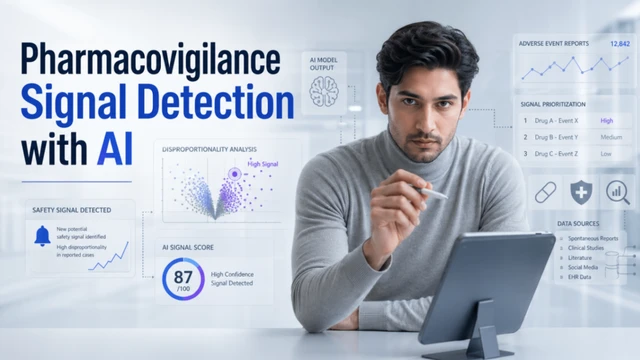
One standout pathway is the pharmacovigilance-signal-detection-with-ai track inside ZANE ProEd’s ecosystem. It’s not a traditional course; it’s a job-simulation system. You work on global case data, apply machine learning for signal prioritisation, and get feedback from industry specialists. Graduates of this track often walk into interviews with a ready portfolio, cutting the job hunt from 12 months to under 3 months. You can explore how it compares to other options on our detailed career guide.
Take the Next Step
Don’t let another certification collect dust. If you’re serious about starting a signal detection pharmacovigilance career, check your readiness first. Ask yourself: Can I create a safety signal report right now? If not, it’s time to build real-world skills.
Build These Skills Now
Programs from ZANE ProEd Academy that directly address the skill gaps discussed above.
Follow Zane ProEd on Google
Preferred SourceAdd our publication as a preferred source to get the latest clinical research guides, industry updates, and career intel directly in your Google Top Stories & AI Overviews.