Signal Detection Pharmacovigilance Career: Step-by-Step Roadmap for Freshers in India
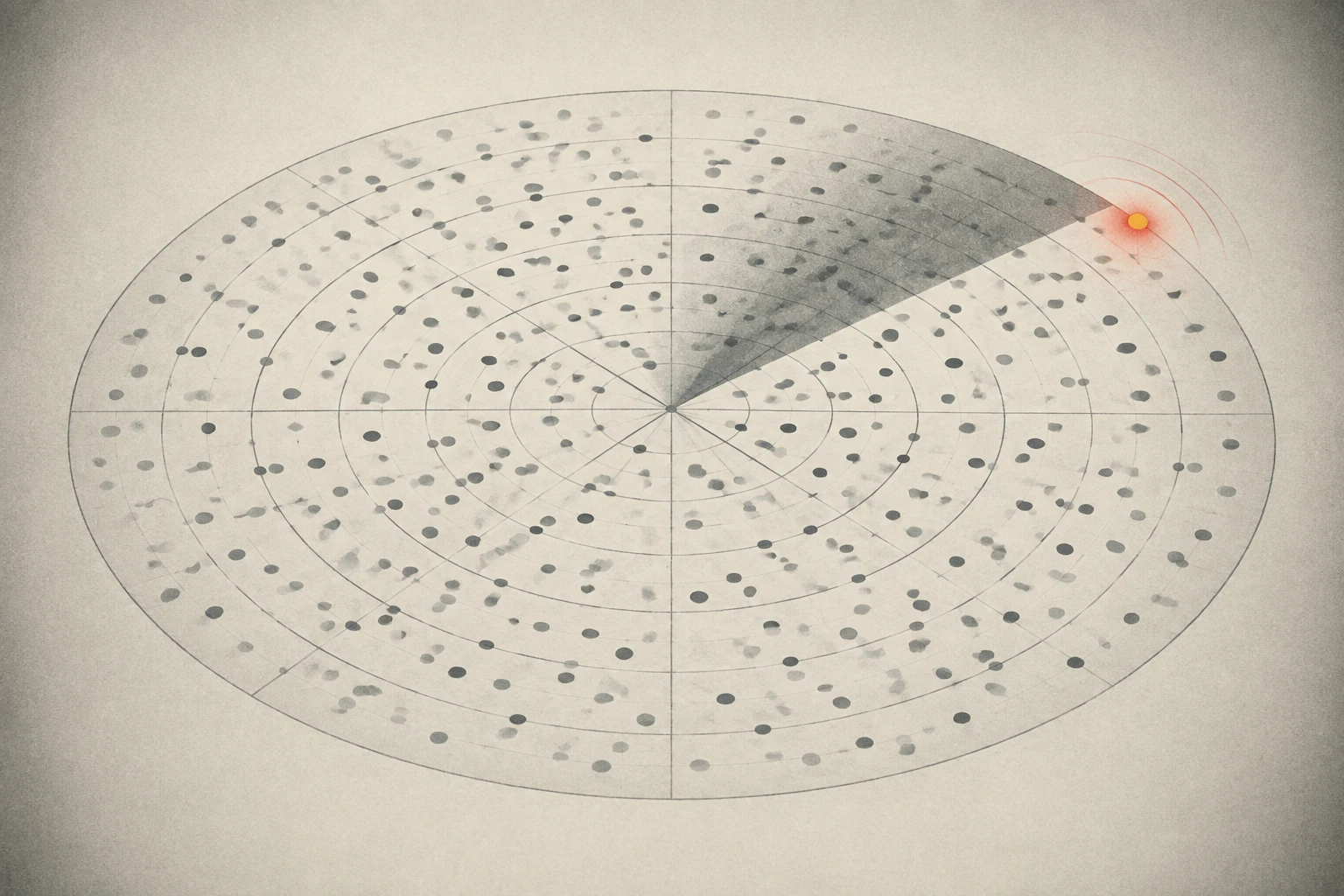
Signal Detection Specialist — A Signal Detection Specialist in pharmacovigilance reviews adverse event databases to spot safety patterns (signals) that may indicate a drug risk. Freshers from BSc, BCA or BTech backgrounds can enter this signal detection pharmacovigilance career in 3-6 months with tool training and a portfolio.
Feeling stuck in a low-paying job? Why this signal detection pharmacovigilance career is your fastest exit
You finished BSc, BCA or BTech from a Tier-2 or Tier-3 college. You are now on a BPO night shift, an IT support desk, or in a small lab — and your salary has not moved in two years.
Here is the honest truth most career counsellors will not tell you: pharma companies in India do not care much about your college rank. They care whether you can read an adverse event case, run a query, and explain a safety signal with evidence.
Build These Skills Now
Programs from ZANE ProEd Academy that directly address the skill gaps discussed above.

That single shift in thinking is why a signal detection pharmacovigilance career is one of the most realistic salary upgrades for non-medical and non-healthcare graduates in India today. Hyderabad, Bangalore, Pune and Mumbai hire for these roles every month. But they expect tools plus workflow knowledge — not just a degree certificate.
What is signal detection in pharmacovigilance?
Signal detection is the science of finding a new or changing safety concern in drug data before it becomes a public health problem.
In simple terms: thousands of adverse event reports come in every day. Most are noise. A few form a pattern. That pattern is a signal.
A Signal Detection Specialist reviews these patterns using statistical and clinical methods, then escalates genuine concerns to the safety committee.
The pharmacovigilance signal management cycle
- Detection — Spot disproportionality or a cluster of similar events.
- Validation — Confirm the data is real, complete and not duplicated.
- Prioritisation — Decide urgency based on severity and patient impact.
- Assessment — Check causality, literature, label status and class effects.
- Recommendation — Suggest label change, Dear Healthcare Professional Communication, or further study.
- Action and documentation — Track the decision and archive the evidence trail.
This full loop is what companies mean by pharmacovigilance signal management. Global regulators such as the WHO and ICH require every marketing authorisation holder to run this cycle continuously.
What is the salary of a Signal Detection Specialist in India?
Salary depends on your experience, city and whether you are in a CRO, a generic pharma company, or a global capability centre.
- Fresher (0-1 year): ₹3.0 LPA – ₹4.5 LPA
- 1-3 years: ₹4.5 LPA – ₹7.5 LPA
- 3-6 years: ₹8.0 LPA – ₹14 LPA
- Lead / Principal (7+ years): ₹15 LPA – ₹25 LPA and above
Compare that to a typical BPO voice process at ₹1.8 LPA – ₹2.5 LPA, and the gap becomes obvious. The signal detection specialist salary jump happens fastest for people who can already demonstrate tool handling on day one.
Top hiring hubs: Hyderabad (largest PV cluster), Bangalore, Pune, Mumbai and increasingly Chennai and Ahmedabad.
You can compare this against related roles in our guide on the drug safety scientist salary and qualifications.
How to become a Signal Detection Specialist?
Almost nobody starts directly in signal detection. The standard route is: case processing first, signal detection second.
- Step 1 — Get in: Apply for Pharmacovigilance Associate or Case Processing Officer roles. These are the entry gates. See our pharmacovigilance case processing jobs freshers handbook.
- Step 2 — Learn the vocabulary: ICSR, MedDRA, serious vs non-serious, causality, expectedness, listedness.
- Step 3 — Learn one safety database: Argus or ARISg. Recruiters screen for this.
- Step 4 — Learn one signal tool: Empirica Signal, Argun, or VigiLyze dashboards.
- Step 5 — Build proof: A documented signal assessment you can walk an interviewer through.
- Step 6 — Move sideways internally: Most people shift from case processing to signal detection within 12-24 months.
So the honest answer to how to become a signal detection specialist is: enter PV, then specialise deliberately instead of drifting.
What tools are used for signal detection?
This is the question that separates interview shortlists from rejections. Recruiters expect you to name tools, not just concepts.
Core statistical and signal tools
- Oracle Empirica Signal — the industry standard for disproportionality analysis.
- Argun / ArisGlobal — widely used in Indian CROs for signal triage.
- VigiLyze / VigiBase (Uppsala Monitoring Centre) — global WHO database access.
- EudraVigilance — European safety database.
- FAERS — US FDA public adverse event reporting system.
Supporting methods and skills
- MedDRA coding and SMQs — the backbone of every query you run.
- Disproportionality metrics — PRR, ROR, EBGM, IC.
- Excel and Spotfire — for trend charts and signal review decks.
- Basic R or Python — now a genuine differentiator for non-medical candidates.
Knowing these signal detection tools and methods by name, and being able to explain when each is used, is what gets you through the technical round.
What qualifications are needed for signal detection roles?
Good news for non-medical graduates: the eligibility bar is wider than you think.
- Accepted degrees: BSc / MSc Life Sciences, BPharm / MPharm, BCA, BTech, BDS, BAMS, Nursing.
- Not mandatory: MBBS or a clinical degree. Clinical review is a separate function.
- Mandatory skills: Strong written English, attention to detail, and comfort with structured data.
- Strongly preferred: Hands-on knowledge of Argus, MedDRA coding, and one signal tool.
- Compliance awareness: ICH-GCP, Good Pharmacovigilance Practice (GVP), and local CDSCO reporting expectations.
The signal detection job description usually reads: review aggregate data, run disproportionality queries, validate signals, prepare assessment reports, support the safety review committee, and maintain audit-ready documentation.
What is the skill gap between college and real signal detection jobs?
Your syllabus taught you theory. Employers test workflow execution.
- College teaches: definitions of adverse drug reactions and pharmacology theory.
- Employers expect: logging into a safety database and running a PRR query on real case data.
- College teaches: exam-style essays.
- Employers expect: a 2-page signal assessment note with data sources, methodology and conclusion.
- College teaches: individual study.
- Employers expect: audit trail discipline and reconciliation across teams.
This is the real reason Tier-2 and Tier-3 graduates get stuck. It is not intelligence. It is a missing workflow layer that no textbook provides.
What is the step-by-step roadmap to become a Signal Detection Specialist?
- Pick your entry gate (Month 1). Target PV Associate and case processing roles in Hyderabad, Pune or Bangalore.
- Master the case-level fundamentals (Month 1-2). ICSR workflow, MedDRA coding, seriousness criteria, narrative writing.
- Learn one safety database and one signal tool (Month 2-3). Practise on simulated data, not just slides.
- Build a signal assessment portfolio (Month 3-4). Three worked examples with queries, charts and conclusions.
- Learn the regulatory frame (Month 4-5). GVP modules, ICH-GCP, CDSCO reporting timelines, audit expectations.
- Apply with proof, not promises (Month 5-6). Lead with your portfolio in every interview and internal transfer request.
Urgency note: as automation and AI take over routine case intake, the roles that survive are the ones requiring judgement — validation, assessment and explanation. Signal detection is one of them. Move before the basic roles get squeezed.
How does simulation-based training close the signal detection skill gap?
Reading about signal detection is not the same as doing it. Employers hire behaviour they can see.
Simulation-based learning puts you inside a realistic PV environment — live-style case data, real query logic, review cycles, and documentation standards that match what a sponsor audits.
Then comes verifiable portfolio proof: assessments you can show, defend and repeat under interview pressure. That is the difference between saying you understand signal detection and proving you have executed it.
This is the model ZANE ProEd builds on. See how the training system works on our about page.
Build These Skills Now
Programs from ZANE ProEd Academy that directly address the skill gaps discussed above.
How does ZANE ProEd build audit-ready signal detection talent?
ZANE ProEd trains for the job, not for a certificate wall.
- Pharmacovigilance Signal Detection with AI — practical exposure to disproportionality metrics, tool dashboards, signal validation logic, documentation standards and AI-assisted triage.
- Industry Essentials of Pharmacovigilance — the foundation layer: ICSR handling, MedDRA coding, case narratives, and the regulatory framework employers assume you already know.
Every module is built around ICH-GCP international compliance and audit readiness — because that is exactly what hiring managers and internal audit teams test in your first year.
You practise on simulated trial and post-market scenarios, build output that mirrors real deliverables, and walk into interviews with artefacts instead of adjectives.
Are you ready to audit your industry readiness?
Do not wait for a lucky referral. Do not wait for your company to train you. That rarely happens on schedule.
Audit your industry readiness today. Can you name the signal management cycle from memory? Can you explain PRR vs ROR? Do you have one documented signal assessment you could present right now?
If any answer is no, that is your gap — and gaps are fixable. Explore simulation workflows, build your portfolio, and turn a Tier-2 or Tier-3 degree into a ₹4-8 LPA entry point instead of a ceiling.
Your college decided your starting point. Your workflow knowledge decides how far you go.
Build These Skills Now
Programs from ZANE ProEd Academy that directly address the skill gaps discussed above.
Follow Zane ProEd on Google
Preferred SourceAdd our publication as a preferred source to get the latest clinical research guides, industry updates, and career intel directly in your Google Top Stories & AI Overviews.