Site Management Associate Job Profile: A Guide for Medical Graduates

A Site Management Associate (SMA) job profile involves supporting clinical trial sites from a remote location. SMAs assist with administrative tasks, regulatory document collection, site communication, and ensuring data quality. They act as a crucial link between the Clinical Research Associate (CRA) and the hospital or research site.
After your BDS, BAMS, BHMS, or Nursing degree, the path forward can feel confusing. You have a strong medical background, but a career in clinical practice isn't for everyone. This is where exploring the site management associate job profile can open up a stable, rewarding career in the pharmaceutical industry—a path many medical graduates overlook.
This role is a hidden opportunity. It allows you to use your medical knowledge in a corporate setting without direct patient contact. You become a key player in the development of new medicines, a critical role in a highly competitive Indian market.
Build These Skills Now
Programs from ZANE ProEd Academy that directly address the skill gaps discussed above.
This guide will break down the SMA role in simple terms. We'll compare it to other roles, explain the salary you can expect, and give you a clear, step-by-step plan to get started. Let's move you from confusion to clarity.
What does a Site Management Associate do?
The site management associate job profile is focused on support and coordination. Think of an SMA as the central hub for a clinical trial site, managing things remotely. They work from an office, not from the hospital or clinic itself.
Their primary goal is to ensure the clinical trial site (the hospital or clinic where the research happens) has everything it needs to run smoothly and follow the rules. This is a core part of the clinical operations career path.
Key site management associate responsibilities include:
- Document Management: Collecting, reviewing, and filing essential documents required for a clinical trial. This is managed in a system called the Trial Master File (TMF).
- Site Communication: Acting as the main point of contact for the clinical trial site for administrative and logistical questions.
- Regulatory Compliance: Making sure the site follows all rules and guidelines, especially Good Clinical Practice (GCP), which are international standards. You can learn more about these standards at the source, ICH.org.
- Data Review: Performing remote checks on the data entered by the site to ensure it is clean and accurate.
- Supporting the CRA: Assisting the Clinical Research Associate (CRA) with preparing for site visits, following up on action items, and resolving issues.
Essentially, the SMA makes the CRA's job more efficient and helps the trial stay on track, on budget, and in compliance with regulations from bodies like the CDSCO in India.
What is the salary of an SMA in India?
Salary is a major factor when choosing a career. The SMA salary in India for freshers is competitive and offers good growth potential. It's a stable entry point into the world of clinical research.
Here’s a realistic breakdown:
- Entry-Level SMA (0-1 year experience): You can expect a starting salary between ₹3.5 Lakhs to ₹5.5 Lakhs per annum. This can vary based on the company (CRO or pharma) and the city.
- Experienced SMA (2-4 years experience): With a few years of experience, your salary can increase to ₹6 Lakhs to ₹9 Lakhs per annum.
- Senior SMA / Lead SMA: As you gain more expertise and take on leadership roles, your salary can cross ₹10 Lakhs per annum and go higher.
The SMA role often serves as a launchpad to other higher-paying roles in clinical operations, such as a CRA or a Clinical Trial Manager. Your initial salary is just the beginning.
What is the difference between SMA and CRA?
This is the most common point of confusion for freshers. Both roles are vital for clinical trials, but they are very different in their day-to-day functions. The SMA vs CRA comparison is all about remote support vs. on-site monitoring.
Here's a simple comparison:
Site Management Associate (SMA)
- Location: Office-based or remote. Very little to no travel.
- Primary Role: Centralized support. Focuses on documentation, communication, and remote data checks.
- Interaction: Mostly via phone, email, and video calls with the site and CRA.
- Key Skill: Highly organized, detail-oriented, strong communication skills.
Clinical Research Associate (CRA)
- Location: Field-based. Involves significant travel (50-70% of the time).
- Primary Role: On-site monitoring. Visits hospitals and clinics to verify data against patient records. You can read more about the CRA role here.
- Interaction: Face-to-face with doctors, nurses, and other hospital staff.
- Key Skill: Problem-solving on the spot, strong interpersonal skills, ability to travel.
Think of it this way: The CRA is the 'field agent' who visits the sites, and the SMA is the 'mission control' specialist who supports them from the base. Many people start as an SMA to gain experience before moving into a CRA role.
How to become a Site Management Associate?
The path to becoming an SMA is straightforward if you have the right qualifications and skills. Your degree in BDS, BAMS, BHMS, or Nursing gives you a strong foundation because you already understand medical concepts.
Here’s what you need to focus on to learn how to become an SMA:
- Educational Qualification: A bachelor's degree in Life Sciences, Pharmacy, or a medical/allied health field (like BDS, BAMS, BHMS, Nursing) is required.
- Understand Clinical Research Fundamentals: You must know the basics of how clinical trials work. This includes understanding the different phases of a trial, key stakeholders, and the overall drug development process.
- Master Good Clinical Practice (GCP): GCP is the rulebook for clinical trials. Knowledge of ICH-GCP guidelines is non-negotiable for any role in clinical operations. This is a global standard monitored by organizations like the World Health Organization.
- Develop Technical Skills: Familiarity with software like Clinical Trial Management Systems (CTMS) and electronic Trial Master Files (eTMF) is a huge advantage.
- Sharpen Soft Skills: Excellent communication, attention to detail, and organizational skills are critical for an SMA.
What are the daily tasks of an SMA in a CRO?
The SMA role in clinical trials is very structured. A Contract Research Organization (CRO) is a company that provides support to the pharmaceutical industry. As an SMA in a CRO, your day is a mix of planned tasks and responding to site needs.
A typical day might look like this:
- Morning (9 AM - 12 PM): Start by checking emails for urgent queries from clinical sites or CRAs. Review the status of essential documents and follow up with sites that have pending paperwork. Update the CTMS with any new information.
- Afternoon (1 PM - 4 PM): Participate in team calls to discuss the progress of different trials. Conduct remote review of site files to ensure they are complete and accurate. Prepare document packages for upcoming regulatory submissions.
- Late Afternoon (4 PM - 6 PM): Address any non-urgent queries that came in during the day. Plan your tasks for the next day. Ensure all communication is logged properly in the system for audit trail purposes.
The job is less about unpredictable emergencies and more about consistent, methodical work to keep the trial machinery moving forward.
The Skill Gap: What Your Degree Didn't Teach You
Your BDS or Nursing degree is valuable. It taught you anatomy, physiology, and patient care. But it didn't prepare you for the business and regulatory side of medicine. Employers expect you to know how a clinical trial is managed, not just how a drug affects the body.
Companies need you to understand concepts like informed consent processes, source data verification, TMF structure, and site activation checklists from day one. This practical knowledge is the gap between your degree and your first job as an SMA.
Your Step-by-Step Pathway to Becoming an SMA
Feeling overwhelmed? Don't be. Here is a clear, actionable plan to bridge that gap and land an SMA job:
- Build Your Foundation: Dedicate time to learning the fundamentals of ICH-GCP and the Drug Development Process. These are the pillars of clinical research.
- Learn the Language and Tools: Get familiar with industry acronyms (CRO, TMF, CTMS, ICF). Understand what these tools do, even if you haven't used them directly.
- Gain Practical Documentation Skills: Focus on understanding the essential documents in a clinical trial. Learn what they are for and why they are important. This is 80% of the SMA's job.
- Optimize Your Resume for SMA Roles: Tailor your resume. Highlight skills like 'attention to detail,' 'process-oriented,' and 'communication.' Mention your knowledge of GCP and clinical trial processes.
- Target the Right Companies: Search for 'Site Management Associate' or 'Clinical Trial Assistant' roles at major CROs in India like IQVIA, Syneos Health, Parexel, and Fortrea.
The Fastest Way to Gain Job-Ready Skills
Reading about these concepts is one thing. Doing them is another. The biggest challenge for freshers is the lack of hands-on experience. How can you manage a TMF if you've never seen one? How can you understand site communication without ever handling a real-world query?
This is where simulation-based learning changes everything. Instead of just memorizing theory, you work on real-world case studies and projects. You practice the exact tasks you will perform as an SMA, building confidence and practical skills before your first interview.
Build These Skills Now
Programs from ZANE ProEd Academy that directly address the skill gaps discussed above.
A System for Career Success in Clinical Operations
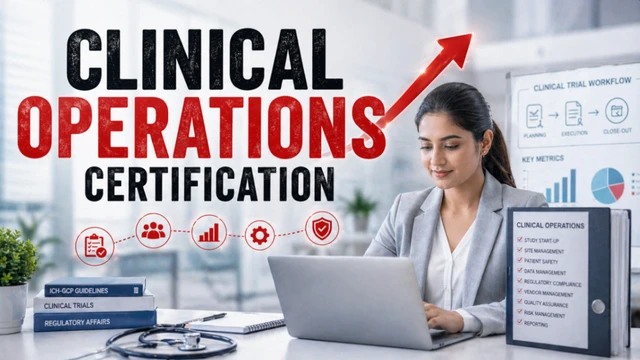
At ZANE ProEd, we don't just offer courses; we provide a system designed to make you job-ready. Our system is built on practical application, not just theory. For aspiring SMAs, our Clinical Operations Certification program covers the A-to-Z of trial management, including the hands-on skills needed for the role.
If you want to specialize further, our Clinical Trial Site Activation Fast-Track focuses on one of the most critical phases an SMA is involved in—getting a site ready to start a trial. This specialized knowledge can make your profile stand out to employers.
Our goal is to give you the skills and confidence to walk into an interview and explain exactly how you can add value to the team from your first day.
Are You Ready for a Career in Clinical Operations?
The site management associate job profile is an excellent entry point into the fast-growing clinical research industry. It offers stability, growth, and the chance to be part of something meaningful.
If you're ready to move from confusion to a clear career plan, the next step is to understand where you stand. See how your skills compare to what top pharmaceutical companies are looking for.
Build These Skills Now
Programs from ZANE ProEd Academy that directly address the skill gaps discussed above.
Follow Zane ProEd on Google
Preferred SourceAdd our publication as a preferred source to get the latest clinical research guides, industry updates, and career intel directly in your Google Top Stories & AI Overviews.